Damascus Main Street Transformation
Prefabrication & Community-Built Urban Prototyping | October 2024
Role: Prefabrication Lead | Fabrication Documentation | Community Build Days
Firm: Graham Projects
Partners: Montgomery County Planning Department, Design Collective
Firm: Graham Projects
Partners: Montgomery County Planning Department, Design Collective
Location: 840 Main St, Damascus, MD 20872
Project Summary
In Damascus, Maryland, 700 linear feet of their four-lane Main Street was temporarily transformed into a pedestrian-oriented civic corridor during a two-day placemaking festival.
Over six months, Graham Projects collaborated with county planners, design partners, and the community to conceptualize a more walkable, socially active, and locally identifiable “Heart of Damascus."
Intervention
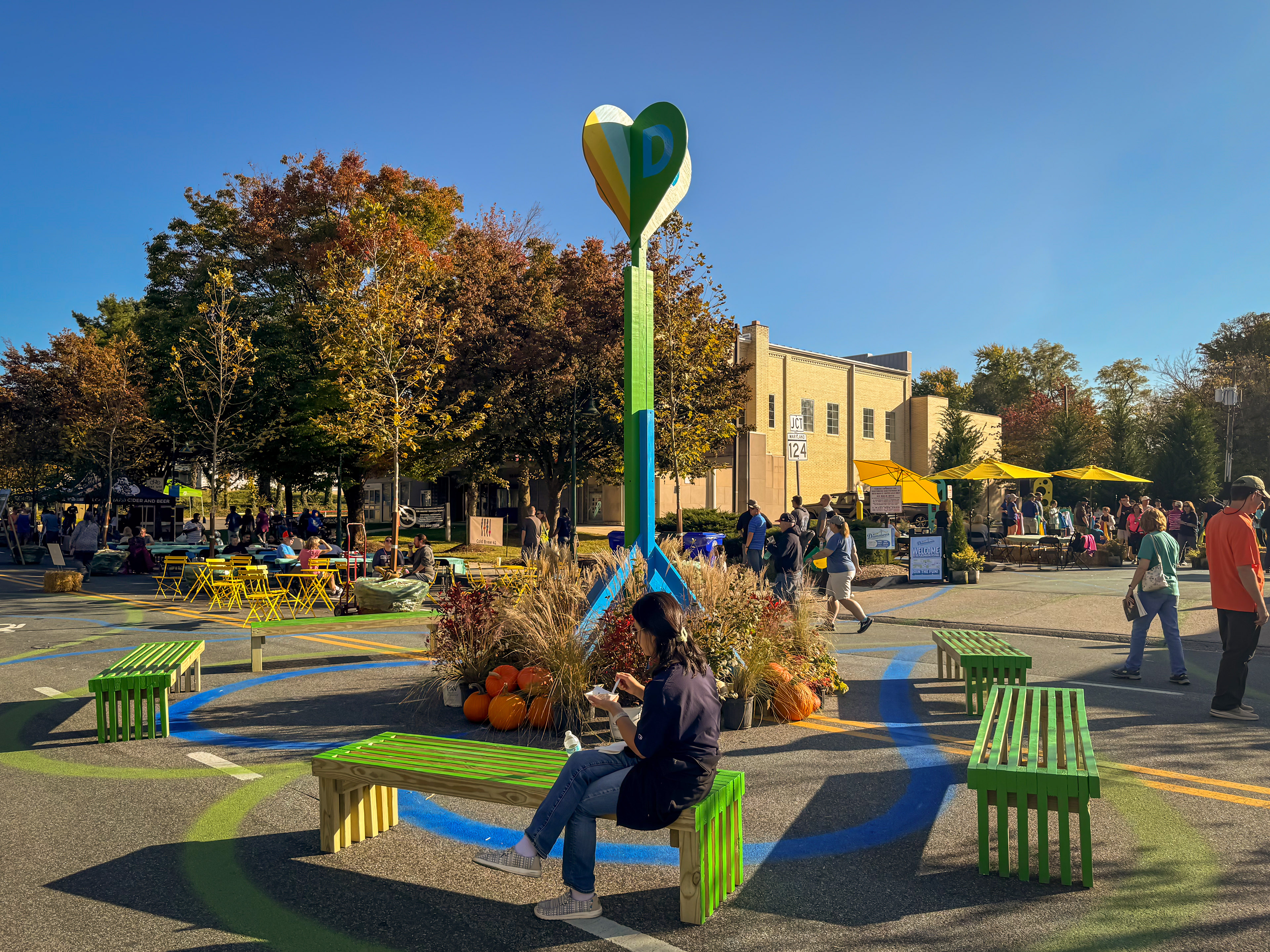
Installed elements included a 550’ interactive mural, protected bike lane, gateway signage, seating, amphitheater, and a 16’ tall centerpiece sculpture.
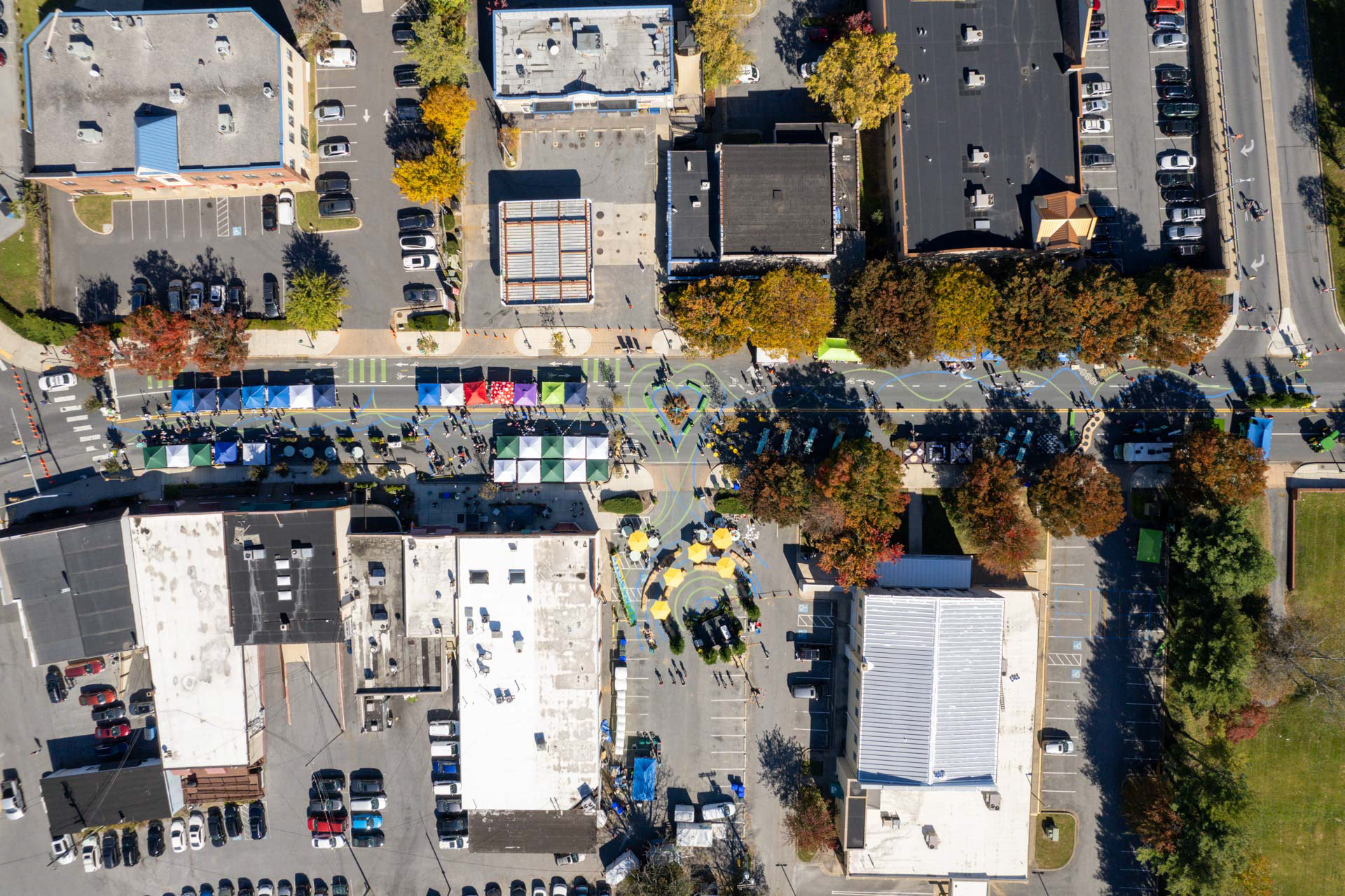
Full context view of the Damascus Placemaking Festival
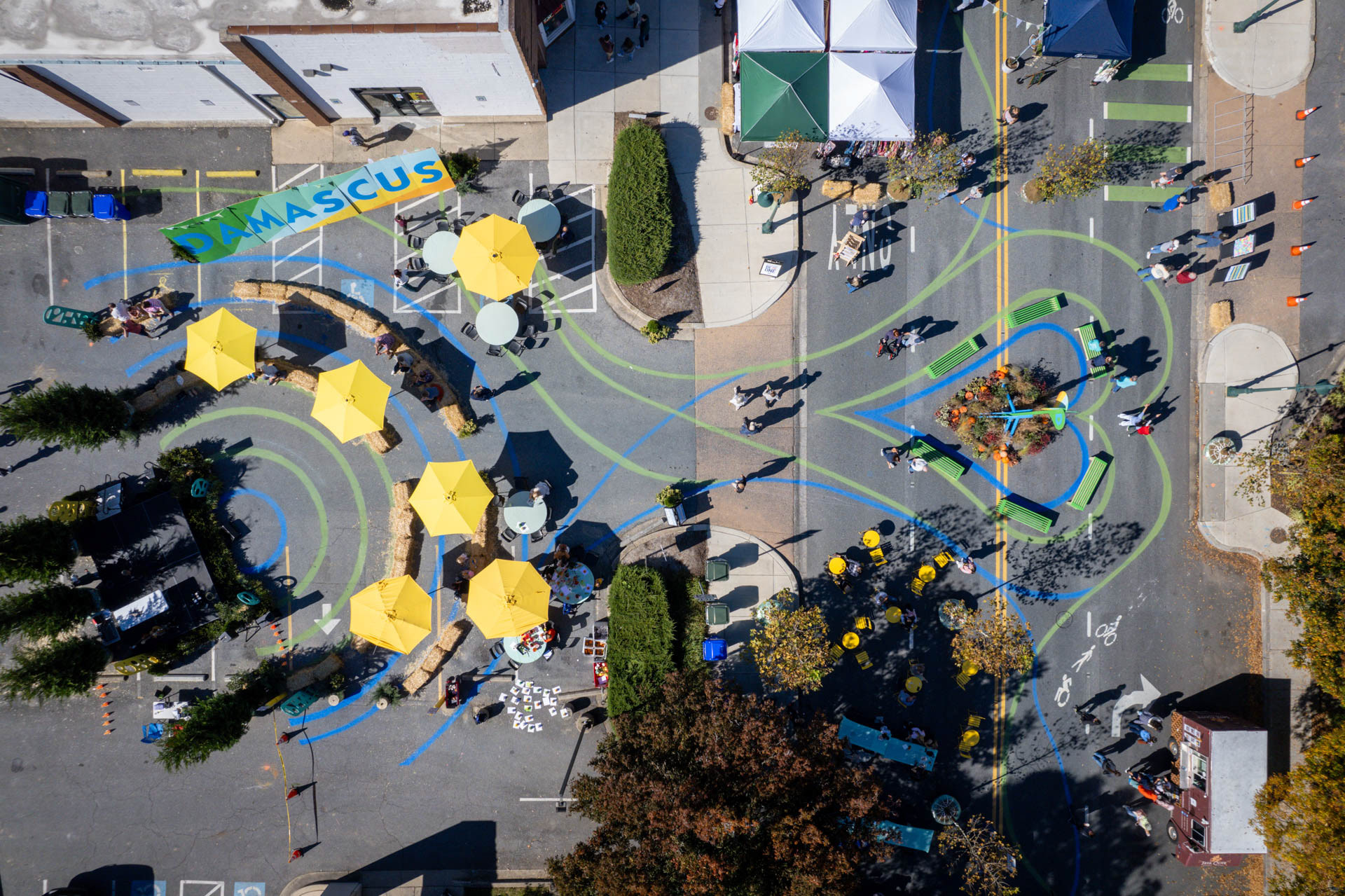
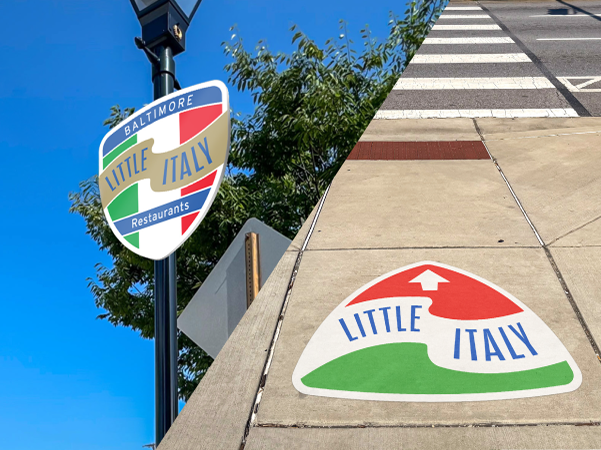
Pavement art winds through festival, subtly guiding visitors to all areas
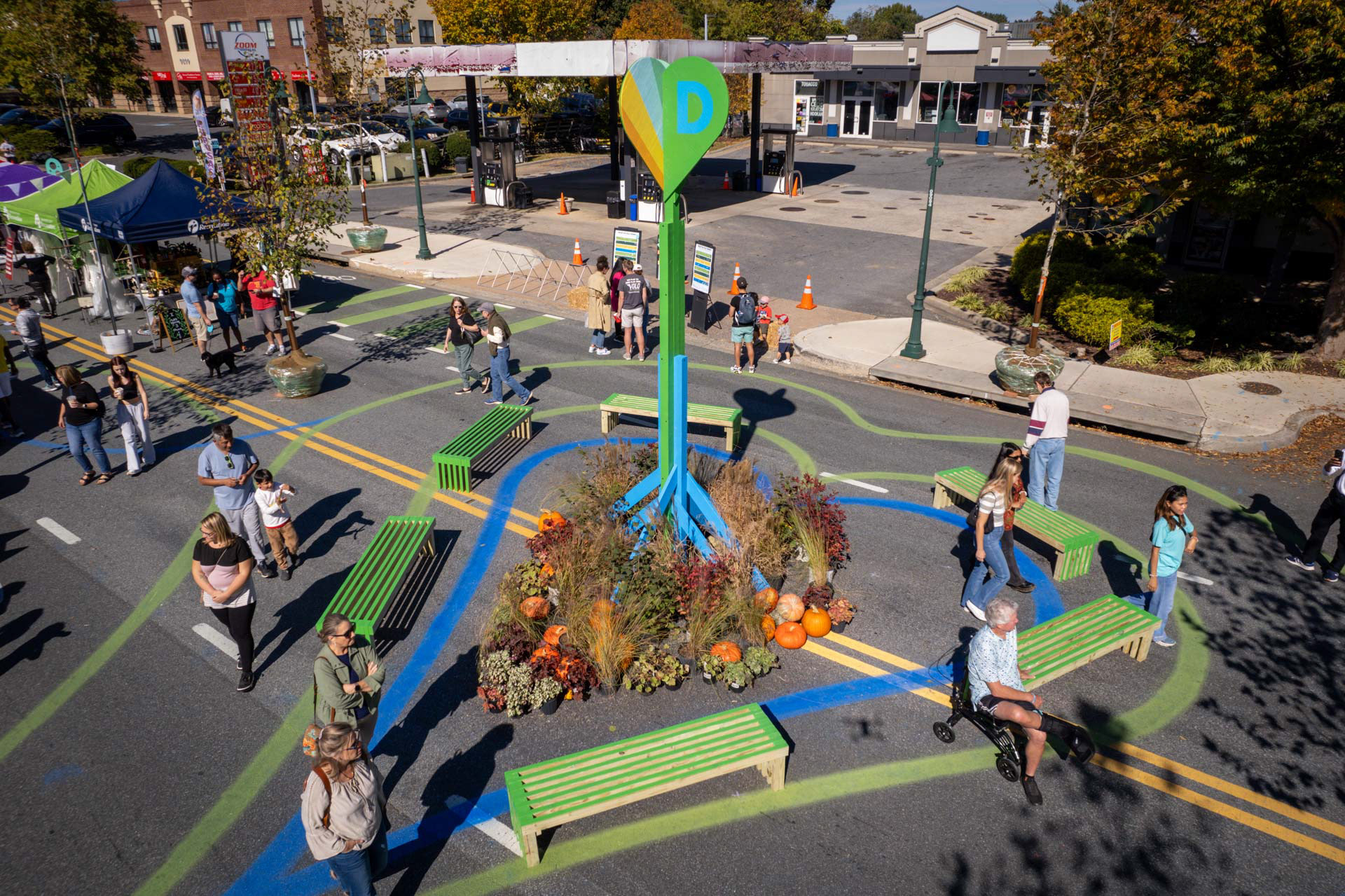
"Heart of Damascus" centerpiece sculpture
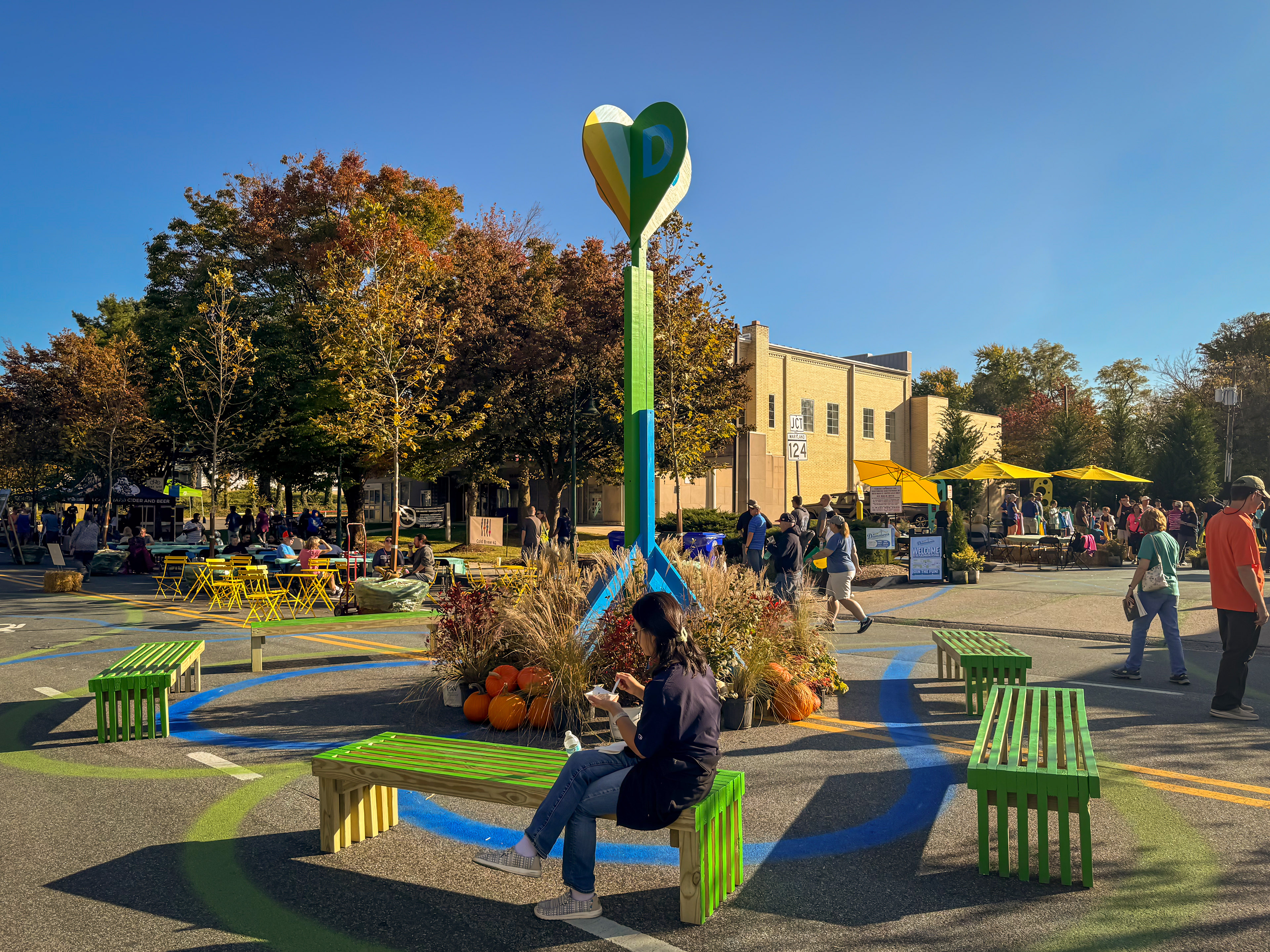
Thoughtful seating locations near food/drink and other entertainment
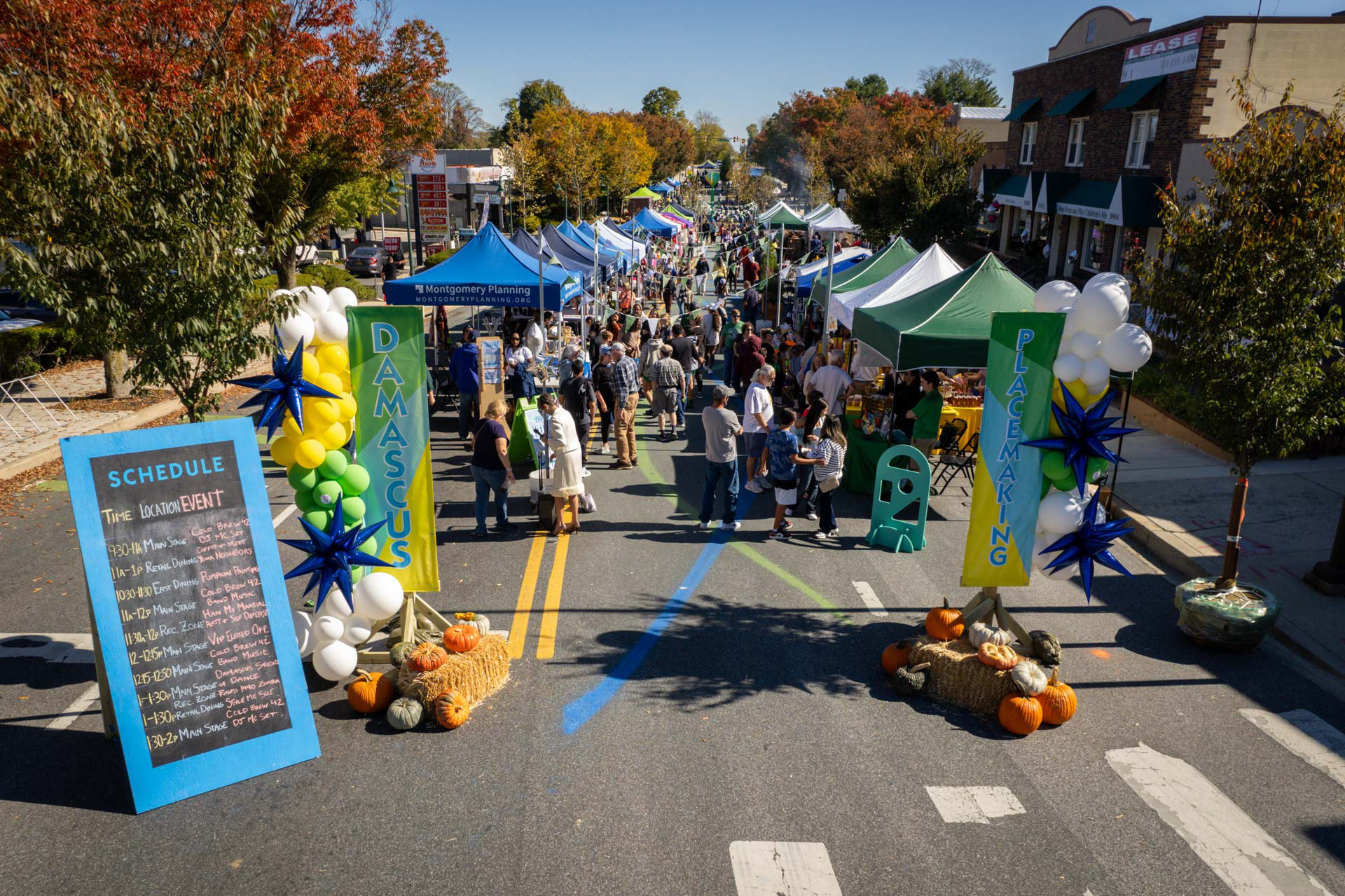
NW entrance to the festival with gateways and daily schedule
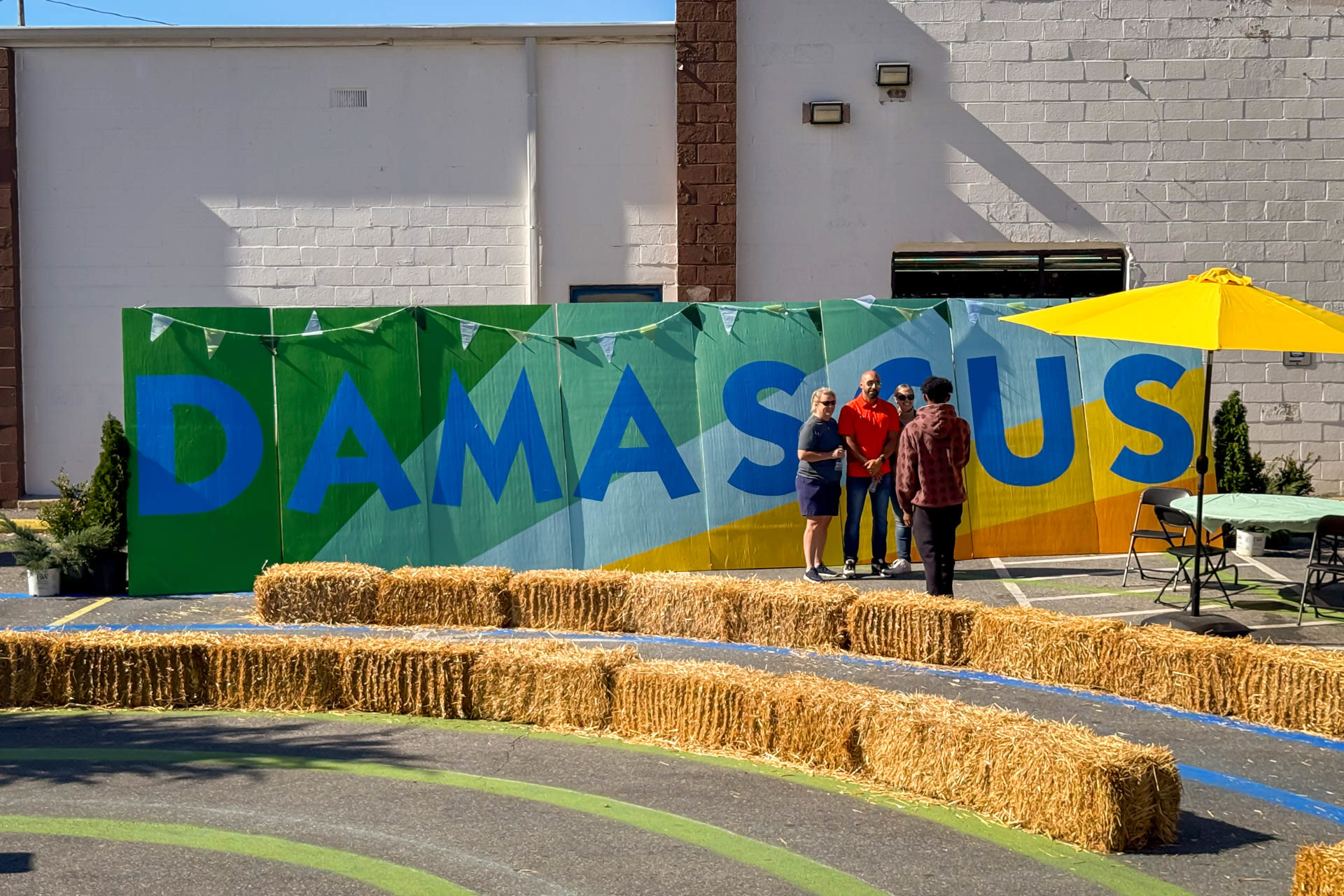
Damascus mural
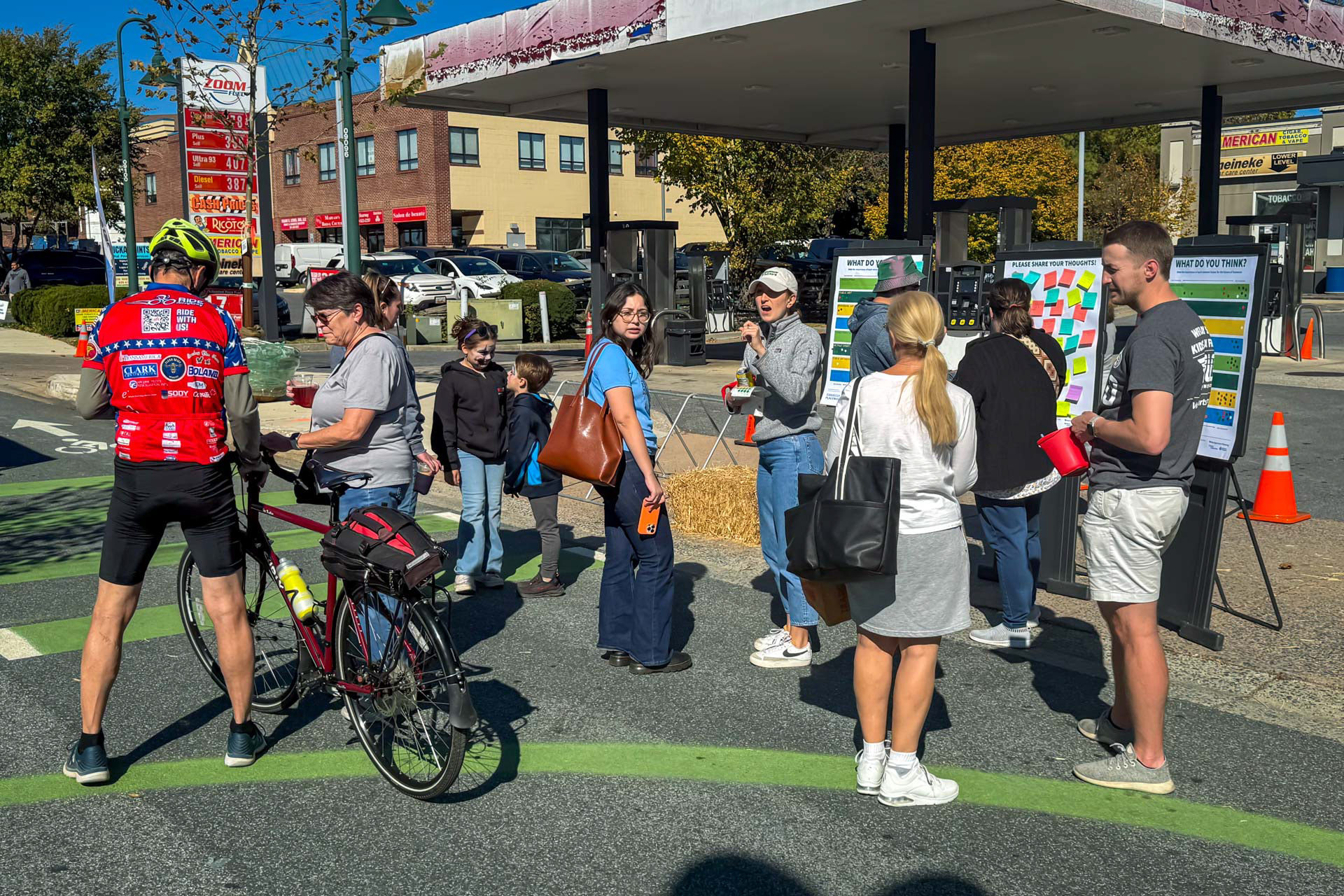
Community feedback boards
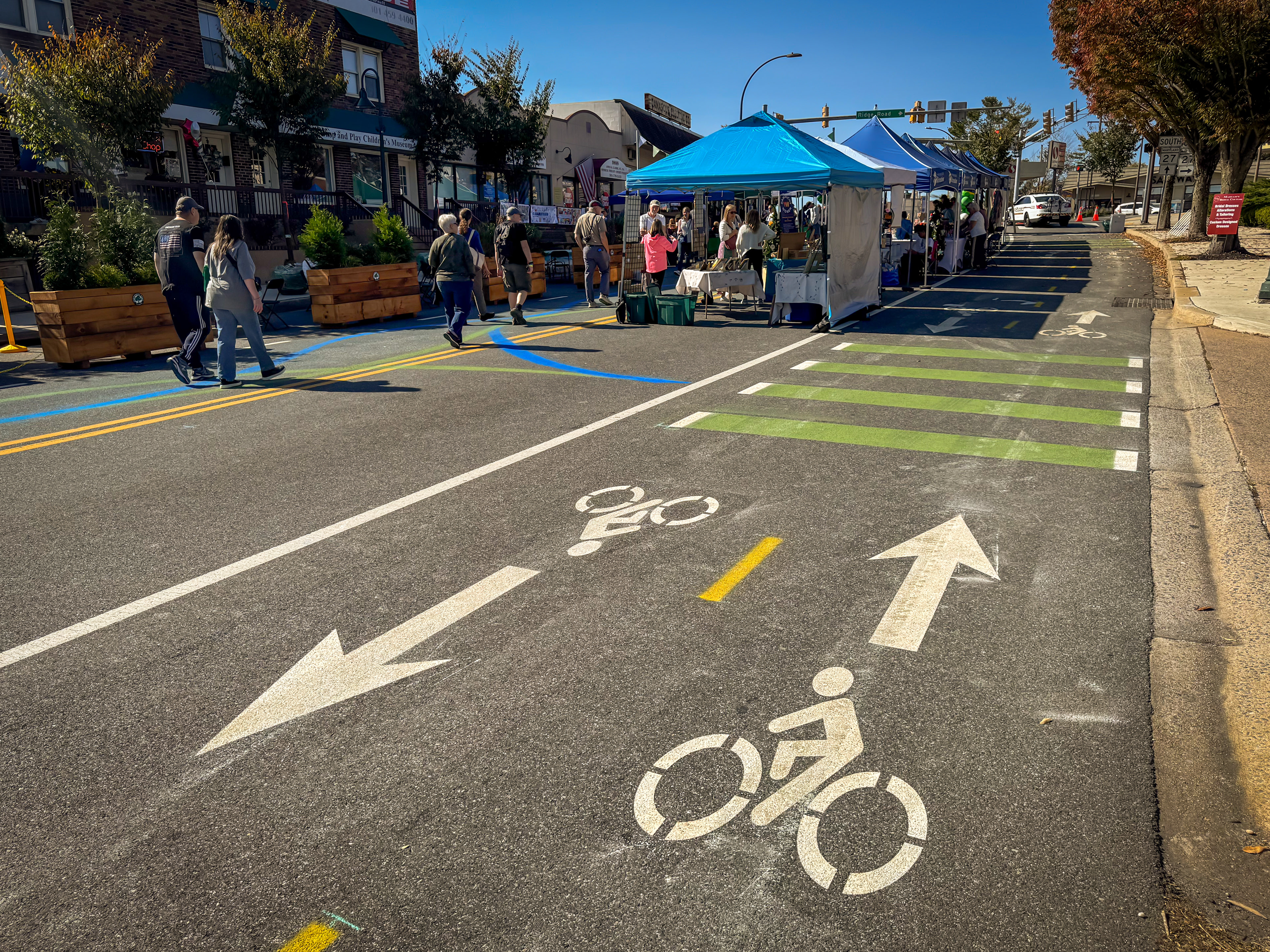
Temporary usable bike lane, also acts as emergency access lane
My Role
Translating Design into Buildable Systems
I co-led prefabrication and reverse engineered complex 3D design elements into fabrication-ready systems.
This included:
• Material-optimized cut lists
• Modular breakdowns of sculptural components
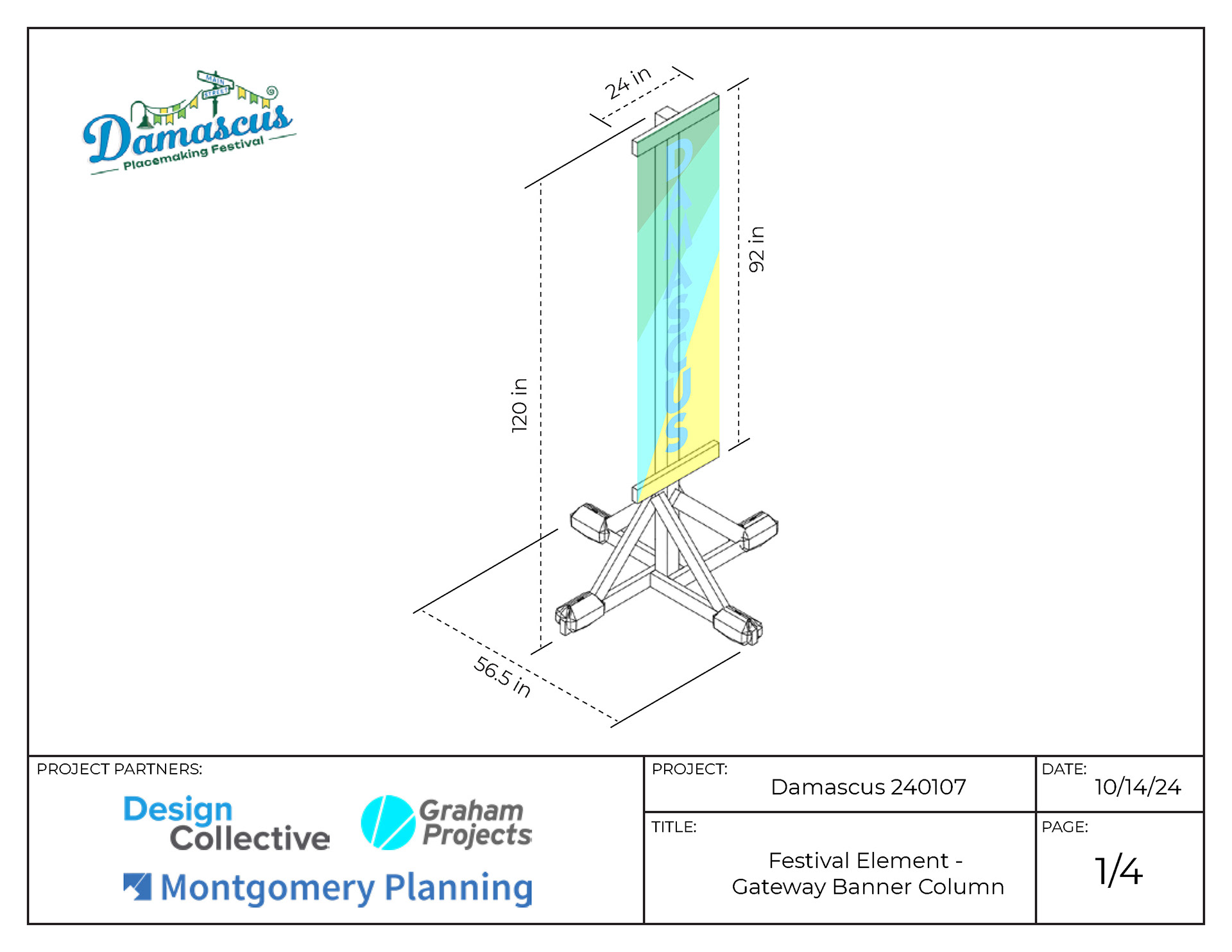
• Step-by-step build instructions, including volunteer-friendly assembly documentation
• Co-lead volunteer build days
These contributions ensured the successful construction of custom 3D elements during community build days.
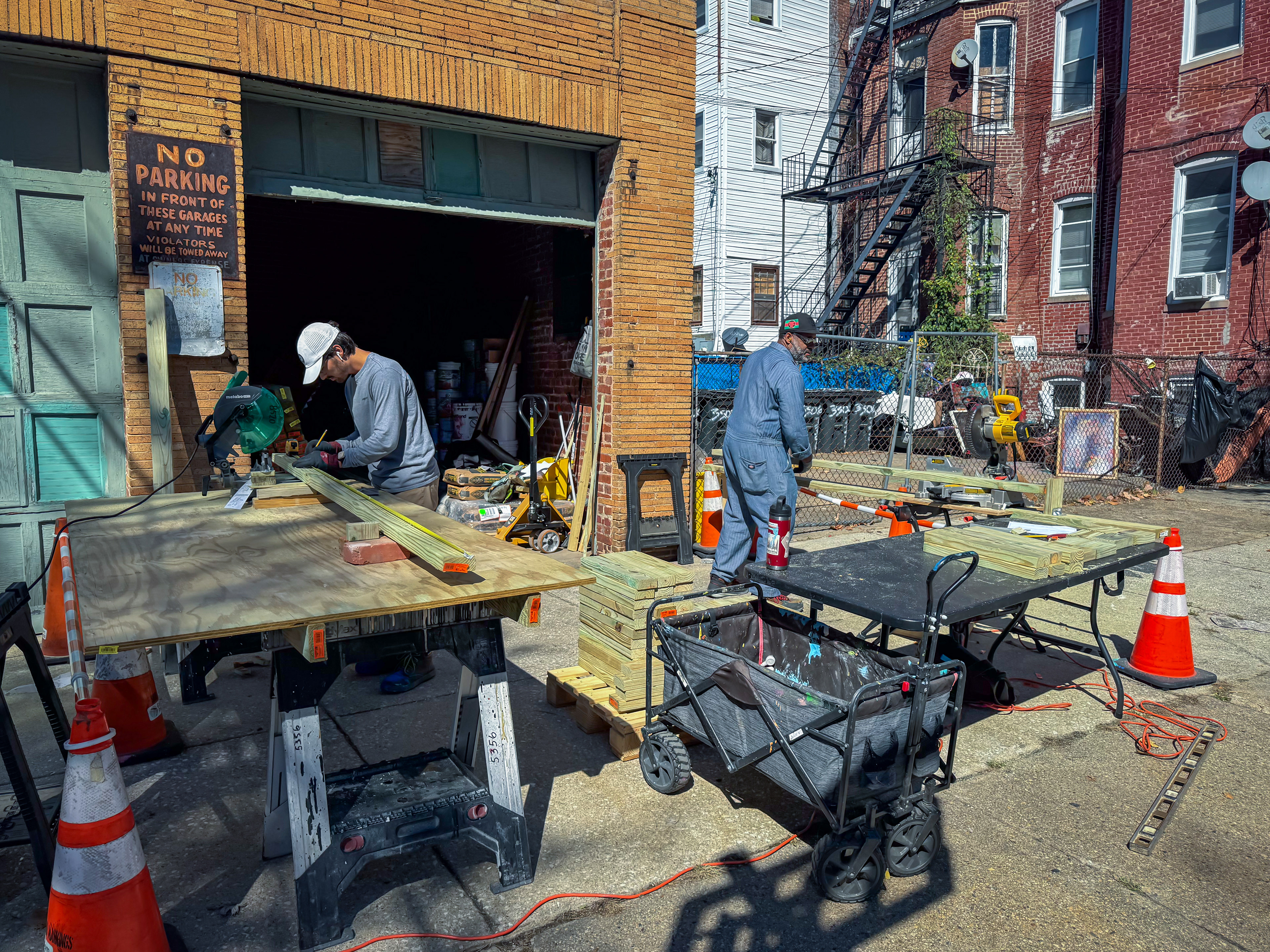
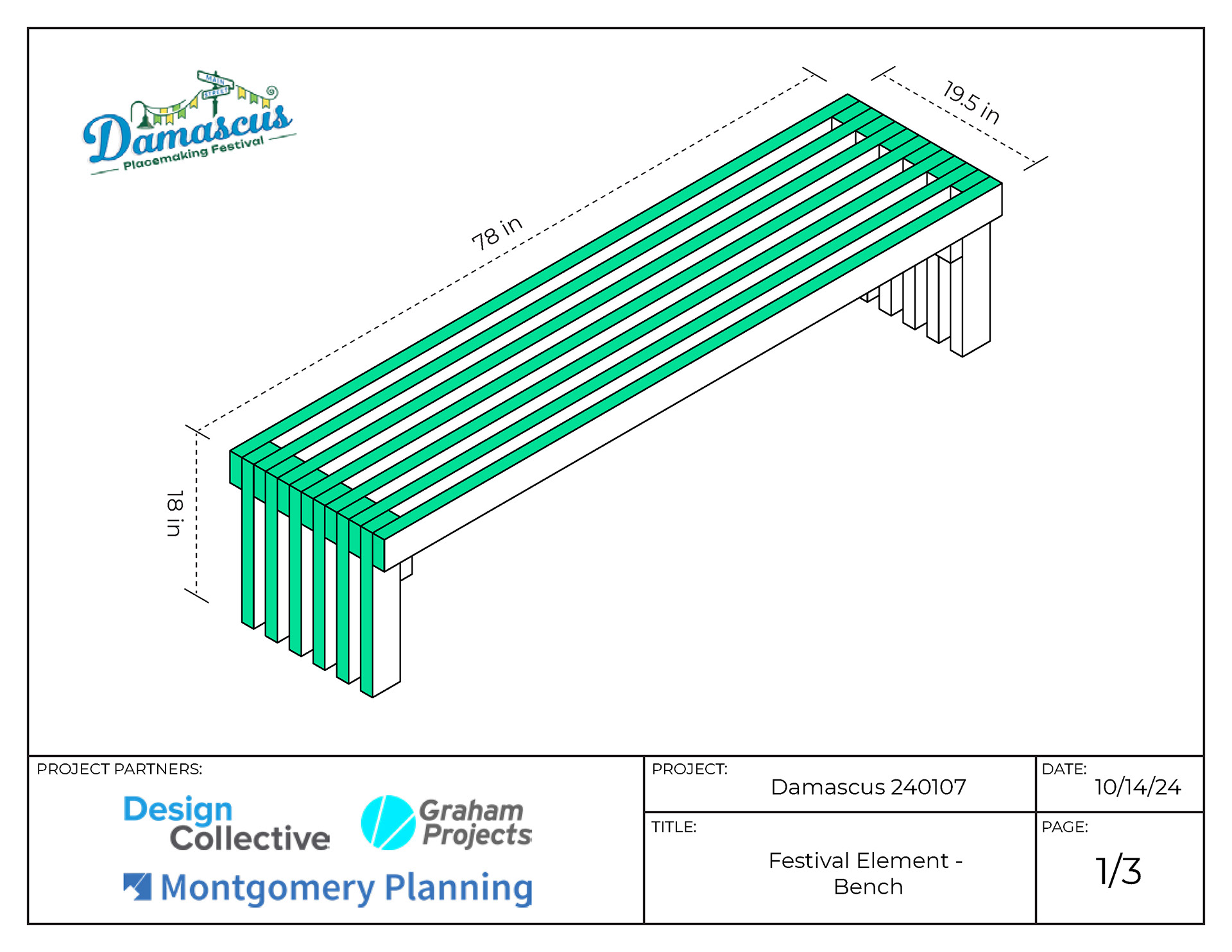
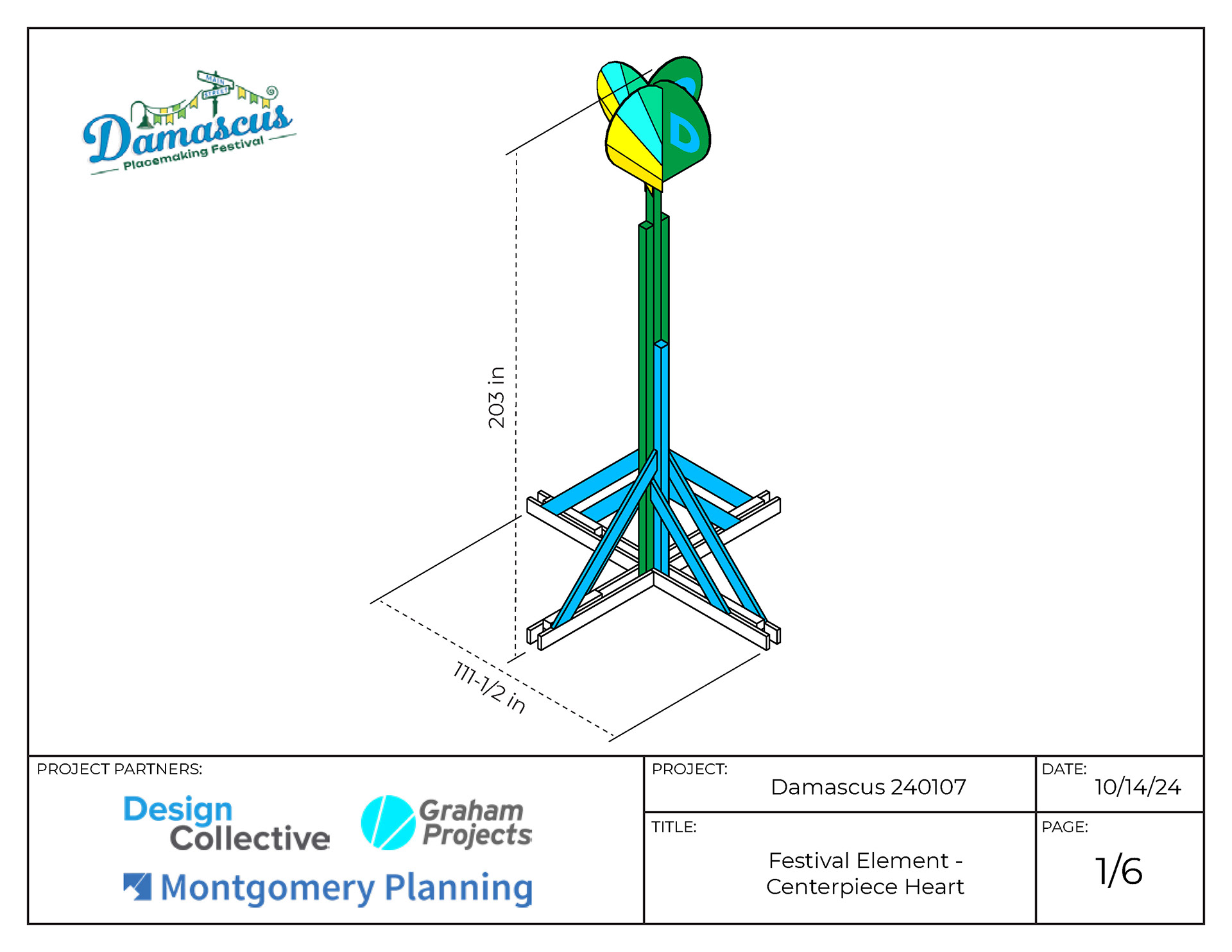
Documentation Detail
From 3D model → cut list → field assembly.
Designing for clarity and modularity enabled non-expert builders to execute complex forms accurately.
Community Build
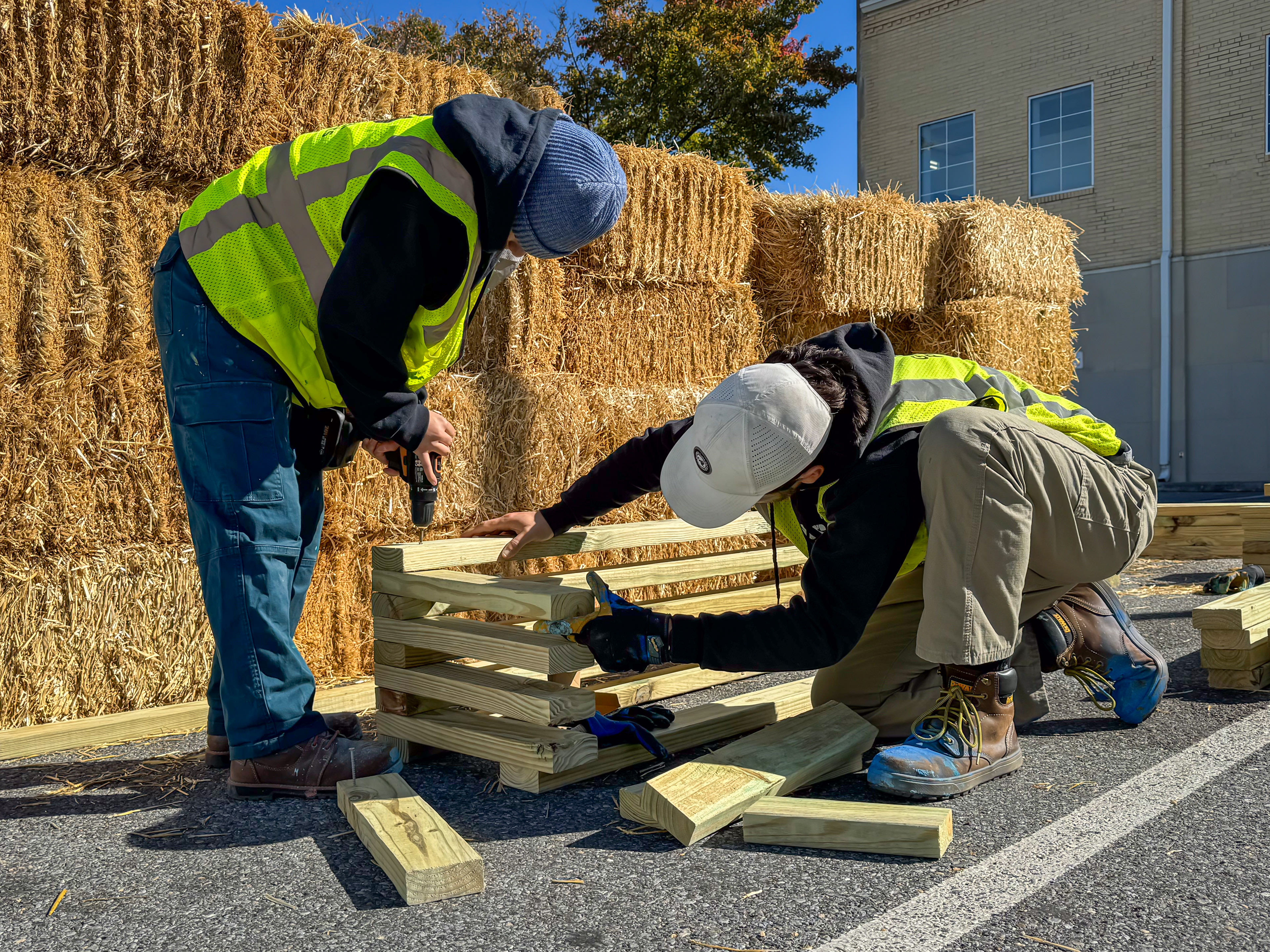
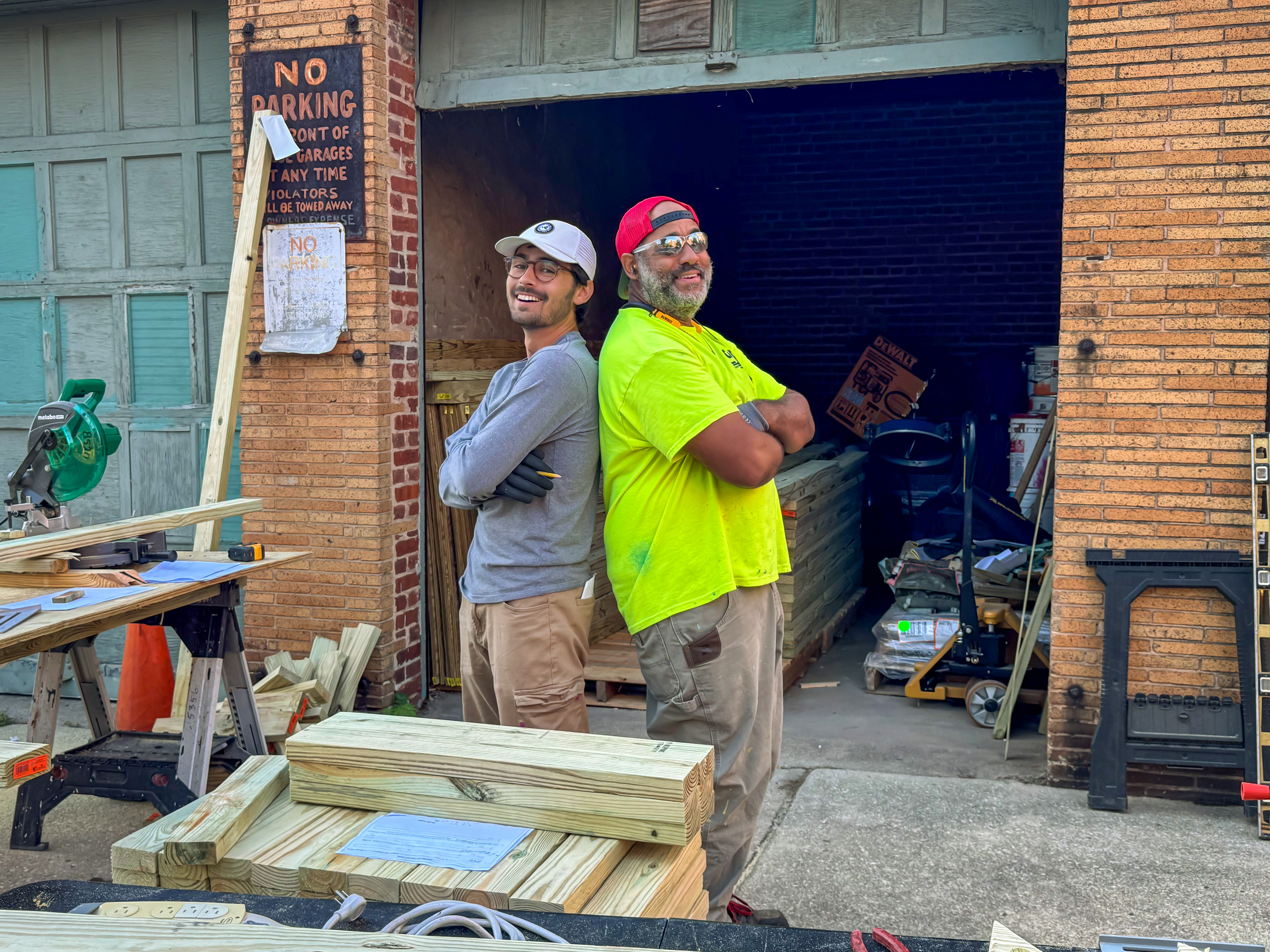
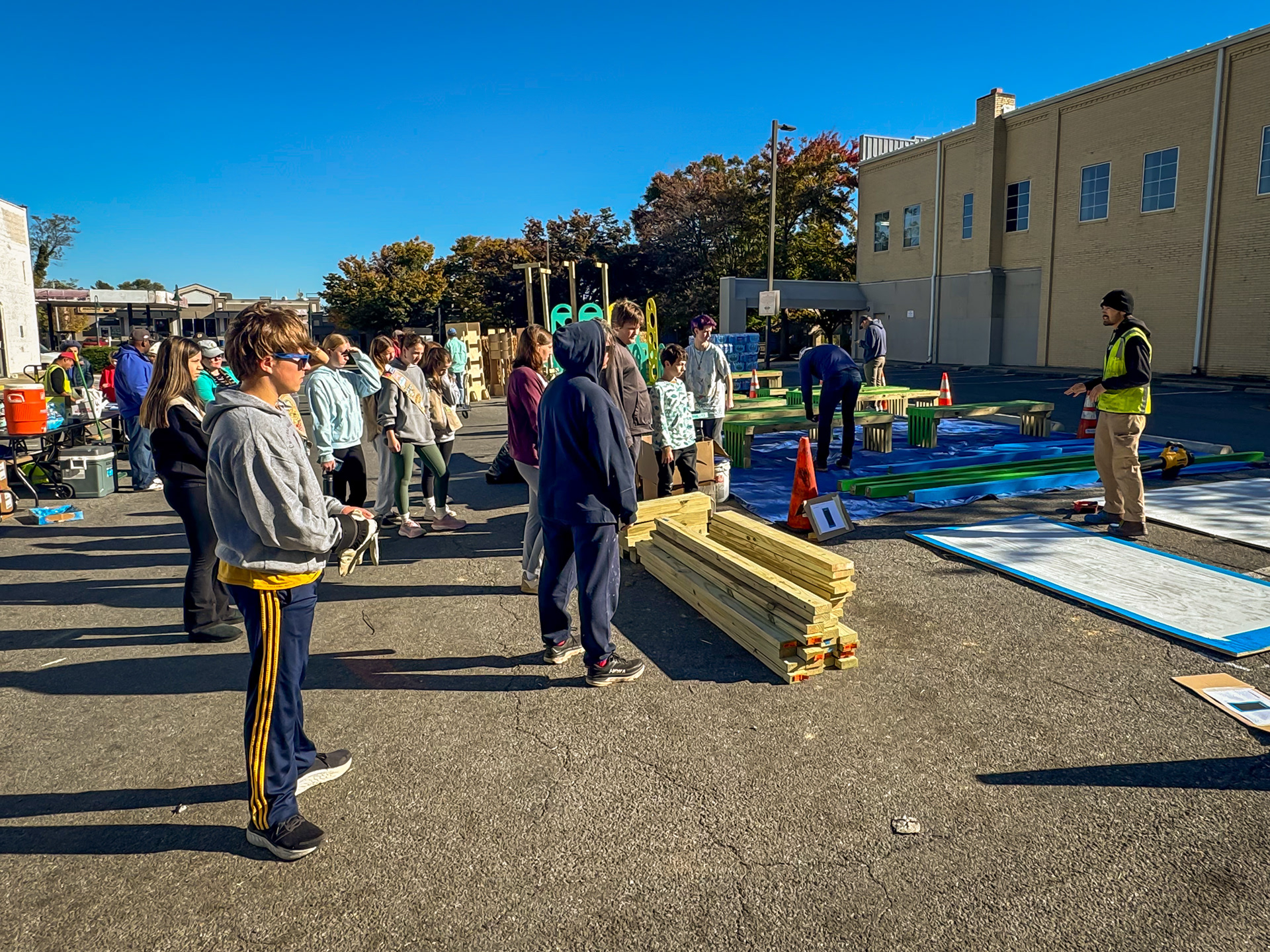
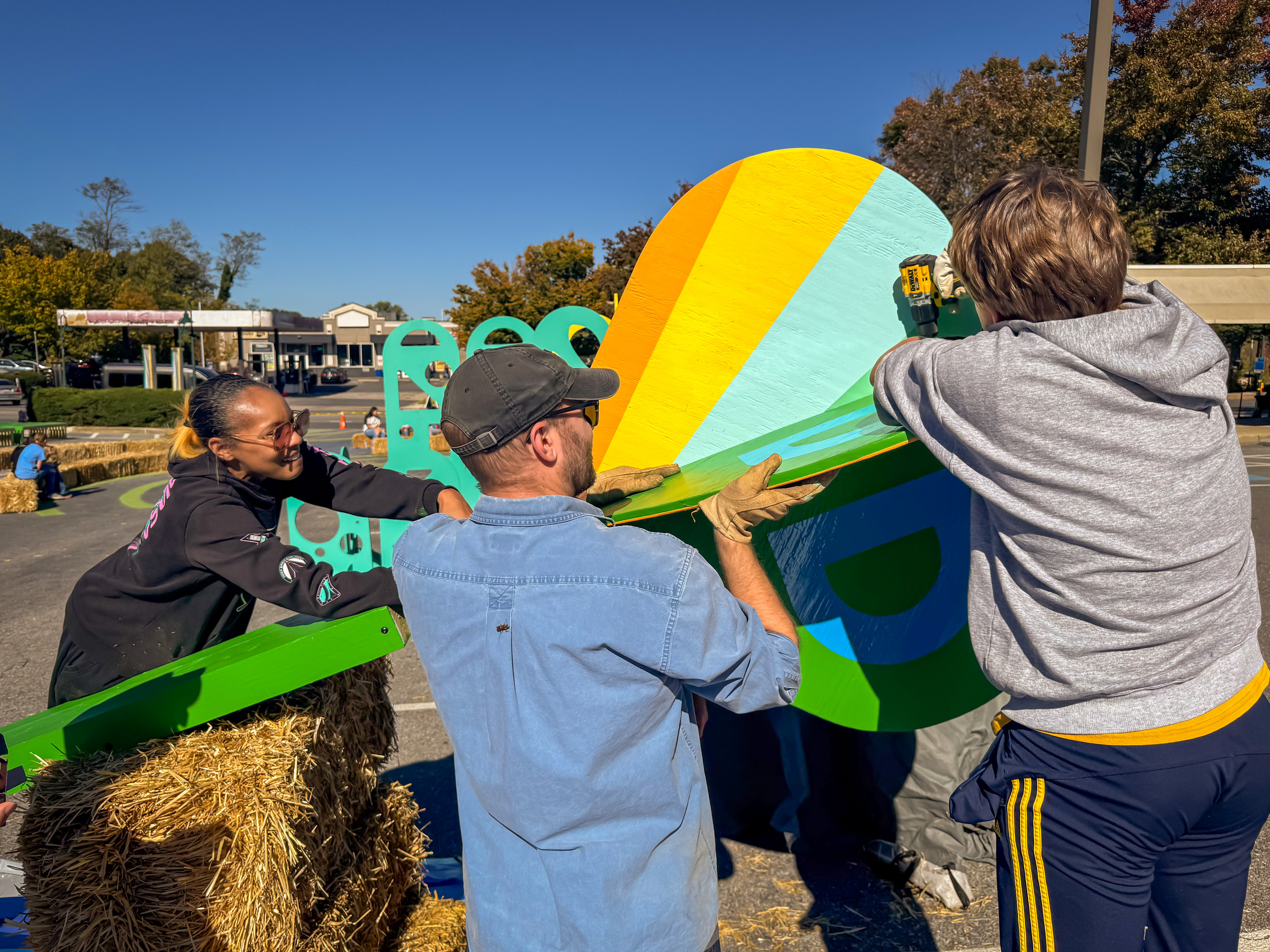
71 local volunteers participated in a two build days leading up to the placemaking festival, transforming fabrication into a civic act and fostering community.
Clear documentation systems ensured safety, speed, and build consistency across numerous installation stations. We worked with each volunteer to accompany different task comfort levels. Assigning build tasks based on comfort and sometimes volunteer excitement for the task.
Reflection
This project strengthened my interest in scalable, prefabricated public realm systems. Temporary urban interventions function as full-scale prototypes, allowing communities to test safer, more human-centered streets before permanent investment. The ability to physically experience a space or use an object is better than anything